Social Icons

Showing posts with label Gain Muscle. Show all posts

Wednesday, December 11, 2019

7 Back Exercises That You Can Do At Home


Back muscles have a very important role in our lives as we use our back muscles to keep us upright and our spine in correct curvature. Poor posture can not only lead to injuries while lifting weights, it can also affect your mood and confidence.

Strong back muscles can help you improve your core and they are the base for progressing in any kind of workout routine. Whether you are trying to bulk up or exercising to lose weight, back exercises should definitely be part of your workout routine.

Here are seven back exercises that you can do at home.

Push-Ups


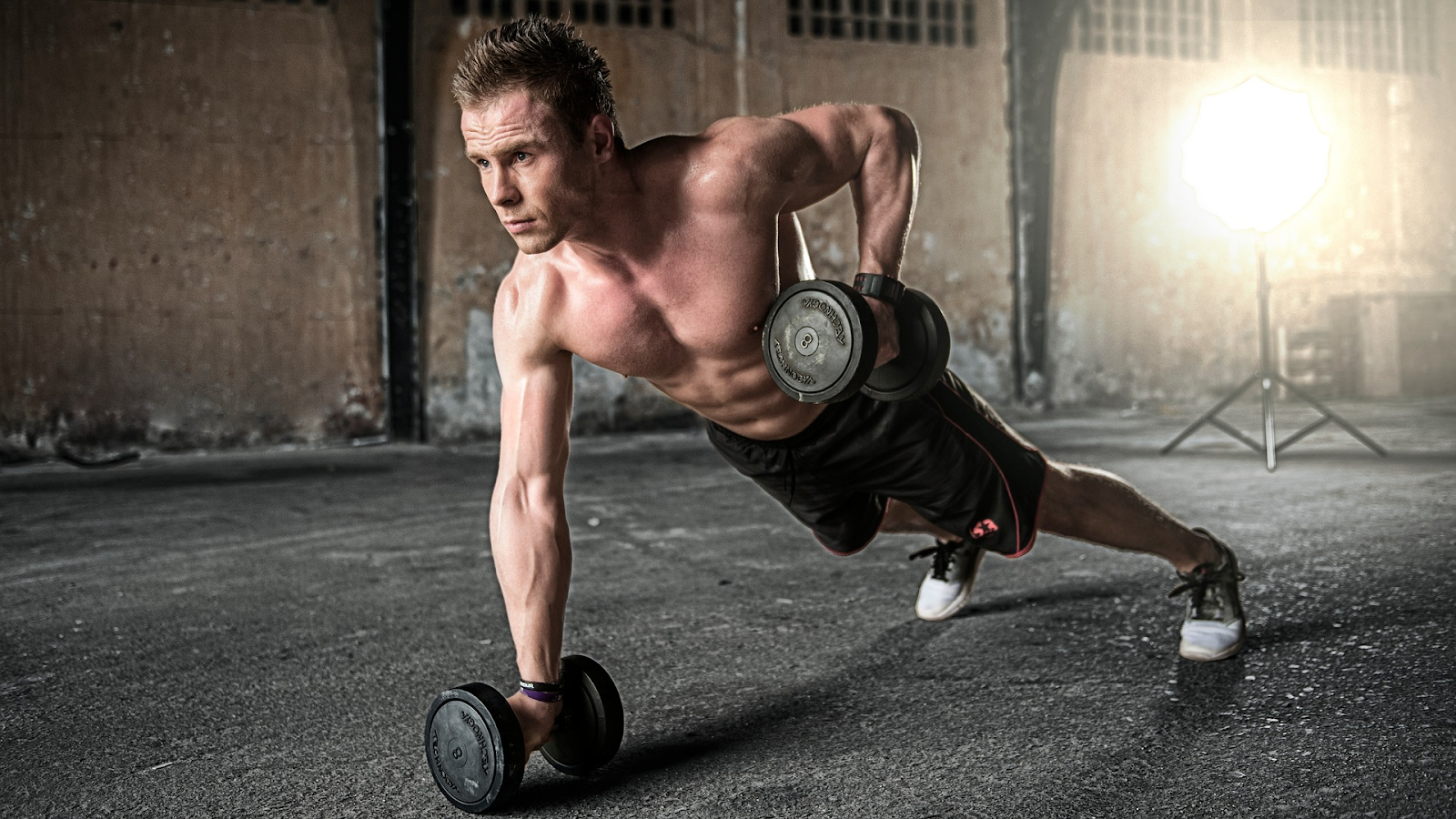
The regular push-up can activate your core and back muscles as much as your arms and legs. You need little space to do it, and there are many variations as you get stronger.

Make sure that your back is straight, and focus on keeping your body in a long line as you lower yourself as close to the floor as you can. If you struggle to perform a proper push-up on the floor, you can start by doing pushups on a workout bench.

The best thing about push-up exercises is that you can make them harder as you progress and get stronger.

Bent-Over Row


There are many rowing exercises that can help you strengthen your back and the bent-over row is a good starting point.

You can use a resistant band when you are learning how to perform the exercise well and then progress to using dumbbells and a bench as you gain strength and stability.

The easiest option to start with is by using a low-resistance band. Start by stepping in the middle of the band, now grab the two ends in either hand in an overhand grip. When you perform a row, imagine squeezing a coin at the shoulder blades as you pull back the bands to your chest.

As you get stronger, you can replace the low-resistance band with heavier weights.

Plank


While plank is a good core exercise, it also makes a good exercise for strengthening your back muscles.

You activate your muscles to hold yourself up in the planking position instead of relying on your arms and legs while performing the exercise.

This exercise is perfect if you have weaker lower back muscles, as it will engage those muscles when you try and keep your body in a straight line.

As with the push-up, there are many options to make the exercise more difficult as you progress and feel stronger.

Another great advantage of this exercise is that you can perform it literally everywhere where there’s enough room to hold a plank as it doesn’t require any equipment (think hotel room while travelling).

Bridge


The bridge is a great exercise for beginners.

Start off by lying flat on the floor. Lying on the ground with your arms at the side, bend your knees as you keep your feet flat on the floor.

Raise your hips off the floor as you squeeze your glutes and hold the position for a few seconds. Feel the buttocks and your hamstrings contract before relaxing slowly back into the starting position.

As you get stronger, you can try doing glute bridge march which is advance version of this exercise.

Superman


The name that speaks for itself, Superman is a good exercise for beginners who want a stronger back and core.

This exercise has little room for error, and you can see yourself improve quite quickly.

Start by lying face down on the floor and gradually raise both arms and legs together and hold the position while looking straight ahead.

Although you may not feel like Superman when you can only hold the pose for a short while in the beginning, the good news is that you soon will if you keep on exercising regularly.

Front Squat


This is a leg exercise that also helps you strengthen your back.

The front squat shifts your center of gravity forward to make your back muscles work while you keep yourself upright. You can use a dumbbell or a barbell, but the idea is to hold the weight in front as you push your hips back into a squat.

Bend your knees until your thighs are parallel to the floor, and if you are unsure, use a workout bench as a guide. Push yourself back into the starting position. This counts as a rep.

Yoga Poses


There are also quite a few yoga poses that can help you strengthen and stretch your back muscles.

Firstly, the Cat Cow pose can help you find your neutral spine position, which you can later use as a starting point for other weight-bearing exercises.

Both Downward Dog and Upward-Facing Dog help to engage the back muscles in different ways.

Child’s pose is an active back stretching exercise that also helps you relax after a long day.

Conclusion


A strong back means that you are less likely to suffer from back pain and injuries when you lift heavy weights. Strong back muscles are also essential for building a generally healthy body.

These seven exercises above require few space and little or no equipment which makes them perfect for someone who is exercising at home.

Wednesday, December 26, 2018

Outdoor Exercise: 3 Ways to Get Started


Working out in the gym is great and all that, but it can’t compare to the fresh air outside and the beauty of nature. Unfortunately, though, it seems as if many of the most popular outdoor activities include mostly cardio such as cycling and running - and those parkour people jumping off buildings, but that’s not for everyone.


If you would like to continue with your weight lifting program but need a change of scenery, you’ve come to the right place. Here is a handful of ideas on outdoor exercises that will sculpt you just as well as those weights in the gym is able to.

It just makes it a bit more fun to exercise and you might even squeeze an extra day or two into your regular routine.

#1 Climbing


If you haven’t tried rock climbing before, it’s probably better to do this indoors first in order to get the guidance you need. A lot of people get addicted to it, though, and it’s a great activity to team up with your love for nature and camping as well; suddenly you have a lot of other rocky destinations on your travel lists.

Your new hobby might even take you around the world, in search for the biggest rock to climb.

There are, however, a lot of different types of climbing and you might want to look into bouldering, free climbing and solo climbing before you get started. It helps a bit to read up on the different types to figure out which one is the best fit for you - and to understand which climbing gear you might have to invest in.

Most importantly, though, climbing is great for your body and will get you strong in a way that weights simply can’t compare with.

#2 Kayaking


When the weather allows for it, you should get out there and try kayaking for a change. This is sometimes considered an extreme sport, although it depends on the kind of waters you plan on heading into, and it’s definitely extreme enough for your body.

You can have a look at this article to read more about what you should know before you get started - but a good tip is to remember to paddle with your whole body and not just your arms. It will make sense soon enough when your arms start to ache, though, but keep it in mind and your whole body will get a much better exercise.

#3 Skiing


Skiing is a great sport no matter if you like it fast, slow and steady, or going downhill at a neck-breaking pace. We don’t always think of it as a great workout, though, but you will definitely use your leg muscles a lot and, of course, have a chance to enjoy the kind of stunning scenery you won’t get in a dry gym. Cross-country skiing will definitely be a great choice in terms of exercise, by the way, so have a look around the web for skiing equipment right away.

Wednesday, December 5, 2018

Getting in Shape for The Festive Season


If you’re looking to get in shape, most people wait until the new year, though there’s something to be said about getting a head-start and forming the building blocks on which you can then catalyze your growth for the new year.

When you think about how a house is built, it’s often the foundations that take the longest time to put in place, and the same is true when it comes to your fitness.  See, whilst we all want to accomplish significant growth, and of course there are links between things like peptides and muscle growth, but fundamentally, you want to be building bulf from a stable base.

This way, it’s like building a pyramid, in that the first level provides the support and stability for the rest of the structure - for instance, if you want bigger shoulders, it makes sense to first build up the strength of the stabilizing muscles around your rotator cuff.  Otherwise, you’re likely to find yourself overloading the muscle and causing an injury.

With that in mind here are a few ways you can start building the foundation for a stronger you in the New Year, and get in shape for the festive season:

1. DRINK MORE WATER


We all know our bodies are made up of mostly water, yet we often find ourselves in a place where we are dehydrated.  We simply don’t drink enough water.

When you consider that being chronically dehydrated (which is what most people are) puts a huge amount of strain on vital organs, which means you perform much less than you would if you were hydrated.

It often results in a foggy head, an achy body, and a low mood.

When it comes to working out, it’s particularly important you keep hydrated.  For instance, the American College of Sports Medicine recommends that you should drink at least twenty ounces of water in the two hours prior to exercise, throughout your workout, and the one most people forget - after your workout, as this is when the body needs to flush out the lactic acid in your muscles.

2. DEVELOP CORE STRENGTH


When people think of “core strength” they mostly assume it has to do with their abs, yet, core stability isn’t limited to your abs and back - it extends to all joint structures, for instance, if you develop stability around your knee joints and shoulder joints before lifting heavy weights you are safeguarding yourself against injury.

For this reason, taking the time to engage in activities like yoga, pilates and swimming can be deeply beneficial to building a firm core foundation.

3. EXERCISE LITTLE AND OFTEN


Many people are guilty of binge exercising, trying to cram in so much to a workout that they overdo it.  Whilst this can be tempting, it would actually make a lot more sense to do a quick thirty minutes in the morning and a quick thirty minutes in the evening - as this way, your body has time to repair and replenish.  

There’s often no benefit in exercising for hours upon hours, as is evidenced by the effectiveness of high intensity interval training.

Thursday, November 22, 2018

Common Swimming Lesson Mistakes and Tips To Avoid Them


If you want to lose weight and follow an active lifestyle, then swimming is an ideal option for beginners. This low impact exercise can work all your muscle groups and help you burn more than 400 calories in an hour!

Additionally, by swimming regularly you can improve your metabolism and tone your muscles for a lean body.

But when you start to swim as a beginner, there are a few mistakes you need to avoid to maintain the technique and do it the right way. In this article, we will share the most common mistakes learners make and tips on how to avoid them.

Mistake #1: Trying To Hold Your Breath

This the first thing that beginners try to underwater is trying to hold your breath. However, it is not your fault because as the first step to learning swimming, we are taught to take a deep breath and hold our faces underwater. But this is wrong because you are depriving your muscles of the oxygen it needs to function.

So before you take your head under water, try to practice breathing deeply through your mouth and exhaling through your nose. While you are at it try to hum to maintain the pace of exhalation. Once you are comfortable with this breathing exercise, try to breathe by keeping your face in the water, exhaling slowly through the nose. Only lift your face when you are naturally out of breath.

Mistake #2: Lift Your Head Out Of The Water To Breathe

Novices think that unless they take their head out of the water, how are they supposed to breathe, right? Wrong. By taking your head out, you push your hips down and ruin your body’s posture that you need to stay afloat. Rather than bringing your head up, you should focus on keeping it down by pinning it to your chin. When you need to breathe, just lift it enough on the same side as your arm to take a breath of air. The trick is to rotate your head in a manner where only your mouth is out the water for breathing and your head remains inside.

Mistake #3: Allowing Your Hips To Sink

While swimming, your goal should be to stay as flat on the water as possible. The lower you dunk your hips the more resistance you will feel while swimming. The position of your body should be parallel to the bottom of the floor and your feet should be just below the water level, not sinking down.

The experts at https://swimminglessonsagency.com.sg/ recommend that you should invest in a good coach who can teach you how to maintain your body posture under water. You can also invest in a snorkel used for swimming to practice breathing on the sides, without pulling your head out.

These are some very common mistakes that beginners face when they learn swimming. You can use these simple tips and your coach’s guidance to overcome these hurdles. 

Tuesday, August 21, 2018

Gaining Muscle Mass Naturally


MASS? Not That Hard!

By Paul Becker owner of http://www.TrulyHuge.com

Gaining mass and strength is not a hard concept, but most people make a mountain out of a mole-hill and as a result usually get discouraged. There are three key elements to putting on mass: 

1.
      A good mass workout plan 

2. 
     Time for recovery and rest 

3. 
    Proper diet 

When these 3 key elements are used together the results will change your outlook on what is possible when your goal is to put on weight in a short amount of time. 

So step one, a good mass workout plan; consists of a strict outline and is centered on your personal weight gain goals. My personal mass workout plan is a good example of what an outline should look like and helped me go from 120 pounds to 170 pounds of muscle mass. Also resulting in a max bench press of 360 lbs. My Mass workout routine is as follows. 

Monday: Chest & Triceps

Tuesday: Back & Biceps

Wednesday: Legs & Shoulders

Thursday: Off

Friday: Chest & Triceps

Saturday: Back & Biceps


Sunday: Legs & Shoulders


Using this mass workout routine I was able to hit everybody part twice a week ensuring maximum growth. Now, in the routine it says one day off but getting to the point where you are not sore for days on end to take just one day off will take some time. It is important to listen to your body. If you are too sore to train then REST! Your body grows faster with more rest. Get at least 8 hours of sleep while your training hard to grow. Again your body grows faster when you rest! 

Another thing to keep in mind is the human body is a great machine and it adapts. What this means is mix it up! Your body will get used to the routine you are using and you will stop getting sore. You do not want this to happen, even after training hard for two years I still get sore. You want to get sore after every workout, this way you know you are breaking down the muscle which ensures that you are growing and gaining as you push toward your goals. 

Now for the most important part to this mass gaining game, I will say it again the MOST IMPORTANT PART is having a good solid mass gaining diet. Without the proper diet and supplements you are wasting your time. Unfortunately, I found this out the hard way. For six months I trained and trained day in and day out and maybe put on five pounds at most. SIX MONTHS PEOPLE! This was all because I was not taking in the right amount and types of food. It is an understatement to say that it was discouraging. I do not want this to happen to you so I am going to drive this point home. HAVE A GOOD SOLID MASS GAINING DIET! 

Now what does a good diet look like? A good mass gaining diet consists of six to seven meals a day with a calorie intake of at least 3500 to 4000 a day. Drink as much water as you can. When putting on mass water plays a key role in the growing process. Also, be sure to keep up with your supplement intake. I usually drink two to three shakes a day and coun them as meals. Each shake should be at least 1000 to 1200 calories.  I also add creatine which helps help with water retention and strength and take this along with your weight gain supplement or protein powder.
  
Follow these tips and your will reach your goals faster then you thought possible.

Tuesday, August 14, 2018

7 Workout Exercises That Will Put You To Bed All Night


If you have ever heard that exercising at night will keep you awake at night, you are not alone. It is common knowledge that many exercises will increase your heart rate and make it difficult to fall asleep. However, there are also a few exercises that help people relax and fall asleep faster at night. It is a good idea to avoid kickboxing classes, speedy runs, and HIIT workouts within a few hours of going to sleep. Instead, try a few gentle exercises that help make sleep better.

Of course, it is wise to avoid drinking caffeinated beverages within a few hours of going to sleep. It is also wise to eat a balanced diet and avoid big meals just before bed, too. If you do have difficulty falling asleep, you might want to speak with your healthcare provider.

These exercises are helpful for falling asleep and staying asleep:

1. Basic calisthenics

While many strenuous exercises will keep you from falling asleep, some easy calisthenics will speed up the process. About one hour before you get ready for bed, try doing some basic exercises, like crunches, lunges, and planks. Your goal is not to get your heart rate to jump, but to increase your body temperature. So, you do not want to speed through these exercises. Instead, make them controlled, slow, and deliberate. Be sure to inhale and exhale with the movements so you can give your body time to warm up. After finishing, do some gentle stretches so your body can cool back down and prepare to go to sleep.

2. Yoga, with some exceptions

Yoga is another exercise that will give you a workout and help you relax in bed. Like the calisthenics, it is best to avoid overly tricky yoga poses, especially inversions, because these will increase your heart rate. It is best to do basic poses like Warrior 1 and Warrior 2, as well as forward bends, balancing poses, and core work like Boat and Bridge.

3. Try Bikram Yoga

If you are looking for a fantastic yoga workout that will help you sleep better, give Bikram Yoga a try. This practice is done in temperature that reaches 100°. The heat will help elevate yours, but the poses will not increase your heart rate so you cannot fall asleep. Most people who practice Bikram Yoga report sleeping better simply because they are so relaxed when the practice is over. You will need 90 minutes to complete a Bikram class.


4. Strength exercises

You can help improve your sleep by counting your reps with weights. Exercises that involve strengthening the body have proven to improve sleep. There are studies that have been done to determine that lifting weights can improve sleep. In fact, most people who lift weights for 30 minutes per day can fall asleep between 10 and 45 minutes earlier than they did before they started lifting weights. Those who weight trained in the morning fell asleep faster than those who worked out in the afternoon or evening. The exercises were completed at a moderate intensity, and the activities worked all parts of the body. Try to include basic strength exercises like bicep curls, calf raises, shoulder presses, and push-ups.

5. Work your core with Pilates

Pilates is another exercise that will help you sleep better. The training builds strength and body temperature. Pilates exercises are done slowly and methodically, so that body makes heat without increasing the heart rate. Again, if you do Pilates moves a few hours before going to sleep, your body will be ready for bed once your body temperature cools. Pilates exercises that involve rolling the spine, like Wall Roll Down and Spine Stretch, all help with relaxation. All you need is 15 to 20 minutes of Pilates exercises done at a slow, intentional speed to help you fall asleep.

6. Take a walk

There isn’t much that walking does not help. It indeed is one of the most beneficial exercises that anyone can do. Experts recommend that people get a minimum of 150 minutes of vigorous exercise each week and brisk walking is one of the practices that counts. While it is not a good idea to go for a quick walk just before bed, doing it at some time during the day - even in little spurts - will help you sleep better at night. Some people will take one long walk each day, but it is also beneficial to get a few short walks in throughout the day, too. Whether you do it inside or outside, taking a step will help you fall asleep each night.

7. Take an early morning jog

If your body can handle jogging at a moderate or slow pace, the best time to do it is in the morning. Cardio exercise, like jogging, is best performed in the morning to help with deeper sleep at night. However, exercising too vigorously in the morning can lead to muscle and joint strain because the body is not warmed up sufficiently. So, if you do decide to exercise early in the morning be sure to take your time and let your body warm up before you exert too much energy.

The key to using exercise to fall asleep is understanding what your body prefers. Some people do not benefit from early morning exercise and others will find that they cannot fall asleep quickly after exercising too late in the evening. Some people also learn that it takes time for the body to adjust to exercise routines and over time those routines might need to change. It is important to remember that in many cases, exercise can help not only with better sleep - it can also help make your waking hours more enjoyable and relaxing, too. Speaking of relaxation if you need a comfy pillow to sleep on check out the beststomach sleeper pillow. 

Sunday, July 1, 2018

Review of Bio-Engineered Protein


By Shaun Swilling

What Is Bio-Engineered Protein?

Bio-Engineered Protein is a high protein, low carb formula designed to help you to gain lean muscle mass.

Bio-Engineered Protein is recommended for anyone who engages in intense exercise such as running, swimming, weight lifting, etc. These people include athletes, bodybuilders, sports men, law enforcement and so on.

Bio-Engineered Protein can be used by both men and women. It can be mixed with water, juice or milk and then taken as a meal replacement, after working out or before going to bed. It is suggested that it be mixed with milk because it produces a thicker nutritious shake. It can also be mixed with a low fat glass of milk and then served with unsweetened berries.

Bio-Engineered Protein features a set of powerful ingredients in a balanced mix. These ingredients include Whey Protein, Casein Protein, Egg Protein, L-Glutamine, BCAA's, Colostrum, Lecithin, etc.

The Pros And Cons Of Bio-Engineered Protein

Bio-Engineered Protein provides the perfect balance of proteins and amino acids to help gain strength and larger muscles. The supplement is formulated using just the right mix of ingredients, this can help save you money considering that the ingredients are all in one package. Another great thing is that it is good for both beginners and professionals. Most users agree that it is an incredible product.

The product contains eggs, milk and soy. This means that those with allergies should avoid the product.

My Personal Experience On Bio-Engineered Protein

Ever since I was looking to gain more muscle I have tried a lot of protein powders, I have to say that Bio-Engineered Protein is the best protein powder I have found for me.

After looking at hundreds of products in the market, I settled for Bio-Engineered Protein. Having used it for several months now, I can definitely say confidently that this is just the product every bodybuilder should use.

I not only am getting bigger and Stronger, but Bio-Engineered Protein also improves and enhances my endurance and stamina almost instantly.

Bio-Engineered Protein tastes great and has great mix ability and safe for consumption in food, water and milk.

Where To Buy Bio-Engineered Protein?

Bio-Engineered Protein is not available in local stores.

Bio-Engineered Protein can be purchased from the www.RheoBlair.com. This will ensure you get the best and the most genuine product.

Tuesday, June 5, 2018

Is CBD Oil Legal For Muscle and Body Building


Cannabidiol or CBD oil has been making waves in the field of alternative medicine for its various benefits, at least from testimonies of people who have tried the product. For those like you who are wondering just how efficient CBD oil is, articles like this can help give basic insight towards how cannabidiol works especially if you want to use it for body building. However, given CBD oil is a kind of alternative medicine, it’s important to understand the legalities involved in its usage. For fitness buffs and body building enthusiasts out there, this one is for you: Is CBD oil legal for muscle and body building?

According to Harvard University’s Health blog, perhaps the most interesting aspect of CBD is that it’s the component of marijuana that has extremely few (if not no) intoxicating properties. In fact, one of the most famous marijuana components, called THC (tetrahydrocannabinol) also causes “high,” which makes it surprising for CBD oil users that CBD isn’t intoxicating at all. Moreover, patients also report CBD benefits such as relieving pain, spasticity, anxiety, and even insomnia. So what are its benefits in terms of body building, and is it even legal?

Is CBD Oil Legal?

While there are no specific laws on CBD oil usage towards muscle and body building, it’s important to understand that there are some states in the United States that have specific regulations on CBD. It might be helpful you try to find specific laws on CBD in your area as well, if you’re living outside the United States. Example of these laws include:

       Alabama allows CBD to be used exclusively by the University of Alabama at Birmingham for patients with debilitating epileptic conditions. 

       Georgia allows the usage of cannabis oil with no more than 5-percent of THC for Parkinson’s disease, mitochondrial disease, multiple sclerosis, Lou Gehrig’s disease, Crohn’s disease, cancer, sickle cell anemia, and seizures.

       Indiana and Missouri allows the usage of substances that has at least 5-percent CBD but no more than 0.3-percent THC for epilepsy that resists treatment. North Carolina allows CBD usage for intractable epilepsy, provided the oil has no more than 0.3-percent THC and can be more than 10-percent CBD.

       Kentucky allows someone to administer, dispense, or transfer CBD provided it’s with a written order of a physician practicing at a associated clinic of a Kentucky public university with a school or college of medicine, or a physician practicing at a hospital.

       Mississippi allows the usage of substances of more than 15-percent CBD but less than 0.5-percent THC, provided it’s tested and/or from the University of Mississippi’s National Center for Natural Products Research.

       Texas allows CBD oil with at least 10-percent CBD to be used provided it doesn’t have more than 0.5-percent THC. Moreover, patients will have to get the approval of two certified specialists before being able to use this.

       Utah allows the possession and use of CBD for those with intractable epilepsy provided a neurologist has signed a statement. The CBD extract in question should have no more than 0.3-percent THC, and at least 15-percent CBD. It should also not have other psychoactive substances.

Why Even Use CBD Oil For Body Building?

Before you buy CBD oil from services such as Trusted CBD Oil, you may want to know its various benefits for your body building efforts. If you want a quick recall as to how you can use CBD oil for your body building efforts, it’s important to understand that CBD oil users see various benefits that can be leveraged to improve your workout:

       It can regulate blood sugar, which means the pancreas produce less fat-storing hormones. This lessens the fat being stored and allows the body to burn more of its fat cells during their workouts.

       It can regular cortisol levels, which regulates a person’s anxiety levels. A cortisol imbalance can result in increase of weight, which CBD oil can help regulate.

       It can help with inflammation, which is something that happens during workout. CBD oil can help someone get back to their workout without taking medicine that can damage their livers, which is something some anti-inflammatory blogs are known to do.

       It can help with sleep, which - along with workout breaks - can greatly help when it comes to building muscle and losing weight.

The Takeaway: CBD Oil For Physical Activities

If you’re one for body building and fitness, you’re likely going to explore various methods of improving your health and diet in order to get the kind of dream bod you’ve been working towards. In this regard, trying different diet programs, workout regimens, and even dietary supplements may or may not work for your benefit. If you’ve been meaning to try CBD oil for your workout, the above would hopefully give you the kind of helpful insight you need for you to make the right decision. 

John Truman

John Truman has a penchant for health and fitness given his upbringing as an active child. As a writer by heart, he wishes to spread his love for healthy living to his readers, which he does by contributing to sites such as Trusted CBD Oil. He strives to ensure his readers get information in an informative and entertaining manner, and is often found jogging during his spare time.